Supply Chain AI Enablement
Turning AI from experimentation into an operational capability
Supply Chain AI Enablement
Turning AI from experimentation into an operational capability
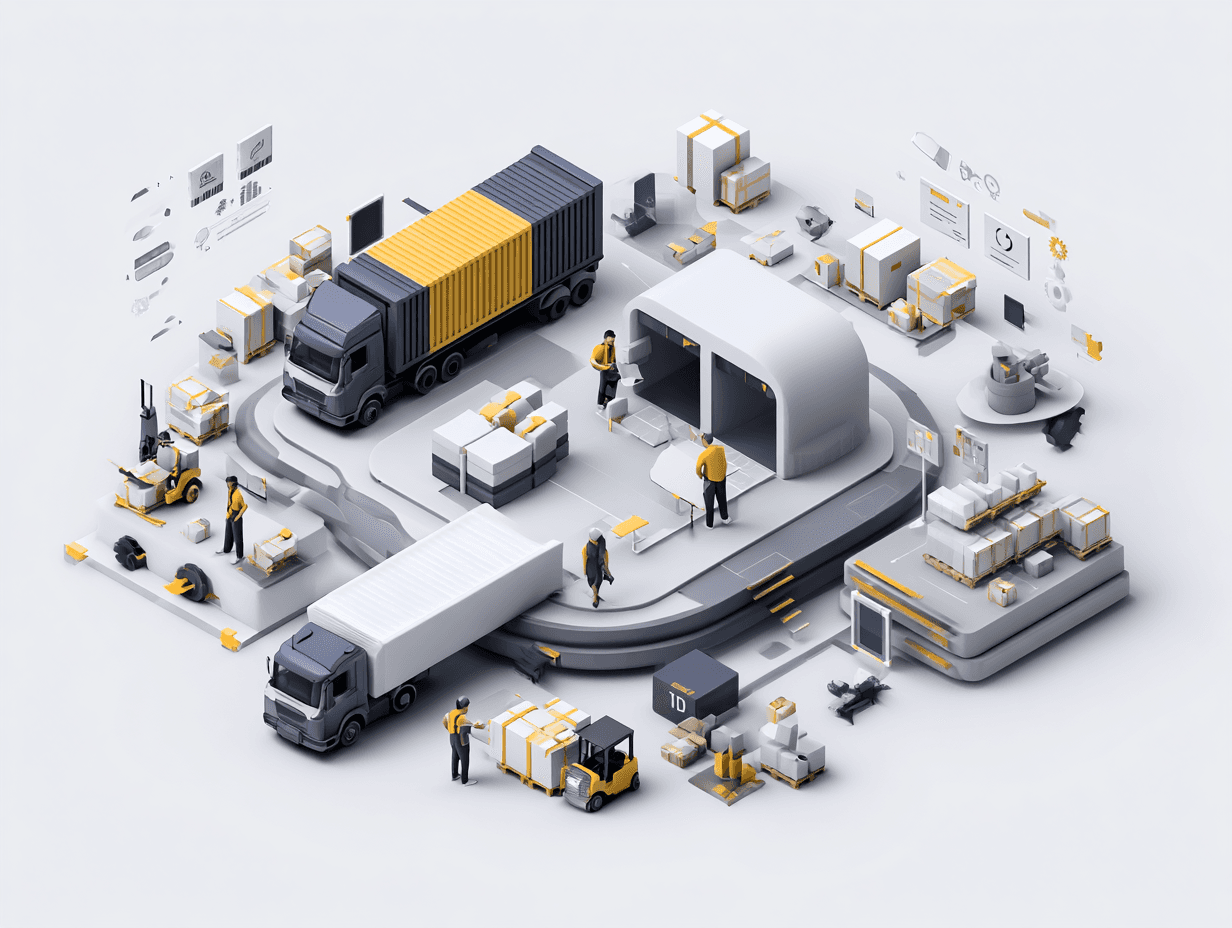
Most AI initiatives stall because they are disconnected from how supply chains actually operate. U2xAI focuses on AI enablement that integrates directly into planning and execution workflows.
The AI Deployment Gap
70% of supply chain AI initiatives never make it past proof-of-concept. Among those that deploy, 60% are abandoned within 18 months.
Common failure modes:
The Science Project Problem: Data scientists build models in isolation. Planners don't know how to use them. Excel remains the system of record.
The Black Box Trust Gap: AI recommends a 40% safety stock increase but can't explain why. Planners override it repeatedly. The system becomes shelfware.
The Perfect Data Fallacy: Vendor promises 95% accuracy. Reality: Messy data yields 70% accuracy. Leadership loses faith. Project gets defunded.
The Technology First Trap: $500K investment in AI platform without defining the business problem. Six months later, no actual decisions are improved.
U2xAI AI Enablement ensures AI integrates into actual workflows, solves real business problems, and delivers measurable ROI within 90 days.
Our Enablement Framework
1. Business Problem Definition
Timeline: 1-2 weeks
Identify decisions that materially impact P&L, cash, or customer satisfaction.
Decision mapping process:
What decisions are made weekly or monthly?
Where are the pain points and errors?
What's the cost of bad decisions?
How fast do decisions need to be made?
Example decision map:
Decision | Frequency | Current Process | Pain Point | Business Impact |
|---|---|---|---|---|
Replenishment orders | Daily | Excel reorder points | No trend adjustment | $2M excess + 12% stockouts |
Safety stock levels | Quarterly | Gut feel | No systematic approach | $800K unnecessary stock |
Supplier selection | Weekly | Manual comparison | Takes 3 days | $200K annual overspend |
Output: Prioritized list of 5-10 high-impact decisions where AI creates measurable value.
2. AI Use-Case Prioritization
Timeline: 1 week
Focus only on high-ROI opportunities deployable within 90 days.
Prioritization approach:
Deploy First (High Value / High Feasibility):
Demand forecasting for top 20% SKUs
Reorder point optimization for fast-movers
Stockout prediction with 2-week lead time
Phase 2 (High Value / Low Feasibility):
Supplier risk scoring with external data
End-to-end supply chain digital twin
Dynamic pricing optimization
Quick Wins (Low Value / High Feasibility):
Automated data quality checks
Exception-based alerting
Criteria: Start with 2-3 high-value, high-feasibility use cases. Move to Phase 2 only after proving ROI.
Output: 90-day deployment roadmap with 2-3 initial use cases.
3. Model Design & Validation
Timeline: 4-6 weeks
Ensure accuracy, explainability, and trust.
Accuracy targets:
Demand forecasting: 15-25% MAPE improvement over baseline
Stockout prediction: 80%+ precision
Inventory optimization: 10-20% working capital reduction
Validation process:
Backtesting on 12 months of historical data
Hold-out validation on most recent 3 months
A/B testing: AI vs. human decisions for 1 month
Continuous monitoring vs. baseline performance
Explainability requirements:
Use interpretable models (XGBoost, LightGBM, linear regression)
Implement SHAP values showing feature importance
Provide confidence intervals for every prediction
Display historical accuracy for each product/category
Example forecast output:
Product: SKU-12345
Forecast: 1,200 units next month
Confidence: 80% (range: 1,050-1,350)

Top Factors Driving Forecast:
- 3-month trailing average: +40 influence
- Year-over-year growth: +30 influence
- Seasonal pattern: -10 influence
- No promotion planned: -20 influence
- New competitor impact: -50 influence

Historical Accuracy: 35% MAPE
Trust-building approach:
Month 1: Shadow mode (recommendations visible, not required)
Month 2: Pilot with 2-3 users
Month 3: Expand to 50% of team (opt-in)
Month 4: Full rollout with acceptance tracking
Feedback loops:
Capture planner overrides with reasons
Use overrides to improve model
Show planners how their feedback improved accuracy
Weekly accuracy reporting
Output: Model deployed with 85%+ recommendation acceptance rate.
4. Workflow Integration
Timeline: 2-4 weeks
Embed AI outputs where work happens—not in a separate system.
Integration patterns:
ERP-Embedded: AI forecasts sync directly into Oracle/SAP/NetSuite. Planners review and approve within existing system.
Excel Add-In: Pull AI recommendations directly into existing planning spreadsheets with a refresh button.
Notification-Driven: AI monitors continuously, alerts planners only when action needed. Example: Slack alert for stockout risk with expedite recommendation.
API-First: Deploy models as REST APIs integrating with any system via standard HTTP calls.
Critical principle: AI must be invisible—it just makes existing processes smarter.
Output: AI integrated into daily workflows without requiring separate system login.
5. User Enablement
Timeline: 4 weeks intensive, then quarterly refreshers
Train teams to interpret and act on AI insights.
Week 1: AI Literacy Bootcamp (4 hours) All planning team members
How AI forecasting works conceptually
What data drives predictions
How to interpret confidence intervals
When to trust AI vs. rely on judgment
Week 2: Hands-On Workshop (8 hours) Demand planners and inventory analysts
Review past forecasts: where AI was accurate and where it missed
Root cause analysis of prediction errors
Override practice and decision-making
Feedback loop training
Week 3: Advanced Use Cases (4 hours) Senior planners and managers
Scenario planning with AI
Safety stock tuning by segment
Supplier risk analysis
Performance monitoring
Week 4: Executive Briefing (2 hours) Leadership team
Business case review and ROI achieved
KPI dashboard walkthrough
Strategic implications
Expansion roadmap
Ongoing support:
Monthly office hours for questions
Quarterly model updates and refresher training
User community for sharing best practices
Output: Planning team confident in using AI tools, knowing when to trust and when to override.
Use Cases We Enable
Demand Forecasting and Bias Correction
Solution components:
Ensemble forecasting (multiple algorithms combined)
Promotional uplift modeling
Seasonality detection and adjustment
Systematic bias correction
Confidence intervals with every forecast
Typical results:
15-25% MAPE improvement
Elimination of systematic forecast bias
80% reduction in forecast preparation time
Weekly or daily forecast refresh vs. monthly
Example: Electronics distributor improved from 58% to 44% MAPE, reducing stockouts by 35% and excess inventory by $1.2M.
Inventory Optimization and Safety Stock Modeling
Solution components:
ABC/XYZ segmentation for differentiated policies
Service level optimization balancing cost vs. stockouts
Lead time variability modeling
Dynamic reorder points based on demand velocity
Multi-echelon optimization for multiple locations
Typical results:
15-30% reduction in safety stock
20-40% fewer stockouts on high-priority items
10-15% improvement in inventory turns
Example: Industrial supplier reduced safety stock from $4.2M to $3.1M while improving fill rate from 89% to 94%.
Replenishment and Reorder Intelligence
Solution components:
Dynamic reorder points adjusting to demand patterns
Replenishment prioritization by stockout risk and revenue impact
Automated PO generation for routine replenishments
Lead time buffer optimization by supplier reliability
Workflow:
AI scans inventory daily
Identifies items approaching reorder point
Calculates recommended order quantity
Prioritizes: Red (order today), Yellow (this week), Green (monitor)
Planner reviews only Red/Yellow items (80% workload reduction)
Approve all or adjust individual orders
Typical results:
60-80% reduction in planner time on replenishment
50-70% reduction in expedites
30-50% reduction in stockouts
Example: Consumer goods distributor reduced planner time from 20 hours/week to 6 hours/week while cutting stockouts in half.
Procurement Analytics and Supplier Risk Detection
Solution components:
Supplier performance scorecarding (OTIF, quality, cost variance)
Predictive supplier delay detection
Financial health monitoring
Volume consolidation opportunity identification
Contract compliance tracking
Typical results:
5-15% procurement cost savings
30-50% reduction in supplier-caused stockouts
10-20% improvement in supplier OTIF
Example: Manufacturer identified $800K in savings through supplier consolidation and renegotiated volume discounts.
Scenario Planning and What-If Simulations
Solution components:
Built-in scenario templates (promotions, demand shocks, supply disruptions)
Impact modeling on inventory, cash flow, service levels
Tradeoff analysis and recommendations
Risk quantification
Common scenarios:
Promotional impact: "What if we run 25% discount for 2 weeks?"
Demand shock: "What if demand increases 50% in Q4?"
Supply disruption: "What if Supplier X can't deliver for 6 weeks?"
New product launch: "What if we add 50 new SKUs next quarter?"
Typical results:
Scenario analysis time: Days to hours
Better decision quality through data-driven tradeoffs
Reduced downside risk through proactive planning
Example: CPG brand used scenario planning to model flash sale, prebuilt inventory, and avoided $150K in lost sales.
Results Clients See
Higher Forecast Accuracy and Planning Confidence
15-30% improvement in MAPE
50-70% reduction in forecast bias
80-90% of planners report high confidence in AI recommendations
3-5x faster forecast refresh cycles
Reduced Manual Effort and Spreadsheet Dependency
50-80% reduction in manual data manipulation time
60-70% reduction in spreadsheet dependency
3-5x faster decision cycles
40-60% reduction in firefighting time
Faster Decision Cycles Across Teams
Weekly planning meetings: 8 hours to 2 hours
Cross-functional alignment improved
Data-driven culture replacing gut feel
Proactive vs. reactive planning
Increased Adoption of AI Across the Organization
85%+ active user rates within 90 days
70%+ recommendation acceptance rates
Reduced shadow IT and manual workarounds
Scalable AI capability across teams
Client Examples
Industrial Distributor ($80M revenue)
Challenge:
4,500 SKUs with 55% forecast MAPE
$4.2M excess inventory plus 18% stockout rate
1 FTE spending 5 days/month on demand planning
AI deployment:
Ensemble demand forecasting
ABC segmentation with differentiated safety stock
Automated replenishment for C-items
Results (12 months):
Forecast MAPE: 55% to 41% (25% improvement)
Inventory: $4.2M to $3.3M (21% reduction)
Stockouts: 18% to 9% (50% reduction)
Planning time: 5 days to 1.5 days per cycle
ROI: 12x in Year 1
E-Commerce Retailer ($45M revenue)
Challenge:
Seasonal demand with 60% MAPE during peak periods
$800K annual revenue loss from holiday stockouts
Manual promotional planning causing over/under-buys
AI deployment:
Promotional uplift forecasting
Scenario planning for peak seasons
Real-time stockout risk alerts
Results (6 months):
Holiday forecast MAPE: 60% to 38% (37% improvement)
Black Friday stockouts: 25% to 6% (76% reduction)
Revenue protection: $600K from prevented stockouts
Post-holiday excess: 40% reduction ($400K markdown savings)
ROI: 8x in Year 1
Medical Device Manufacturer ($120M revenue)
Challenge:
200 critical components from 50 suppliers
Production stoppages costing $50K/day
No visibility into supplier risk until delays occurred
AI deployment:
Supplier performance tracking
Predictive delay detection
Lead time variability safety stock modeling
Results (9 months):
Production stoppages: 12 days/year to 2 days/year (83% reduction)
Stoppage cost avoidance: $500K annually
Procurement savings: $300K from supplier consolidation
Inventory reduction: $600K from lead time optimization
ROI: 9x in Year 1
Service Tiers
AI Quick Start
$50K-$75K | 8-12 weeks
Best for: Single use case deployment
Business problem definition workshop
1 AI use case design and deployment
Model training and validation
Basic workflow integration
4-week user enablement program
30-day post-launch support
AI Foundation
$100K-$150K | 12-16 weeks
Best for: Multi-use case deployment
Comprehensive use case prioritization
2-3 AI use cases designed and deployed
Advanced workflow integration (ERP/Excel)
Full user enablement program
90-day post-launch support
Monthly performance reviews
AI Transformation
$200K-$300K | 6-12 months
Best for: Enterprise-wide AI adoption
Full supply chain AI strategy
4-6 AI use cases deployed in phases
Enterprise system integration
Comprehensive enablement program
6-month ongoing optimization
Quarterly executive reviews
Center of excellence development
Return on Investment
Typical ROI: 5-10x in Year 1
Example ($75M company with AI Foundation tier):
Annual investment: $125K
Value delivered:
Inventory reduction: 15% of $15M = $2.25M cash freed
Carrying cost savings: 25% of $2.25M = $562K annually
Stockout reduction: $400K revenue protection
Expedite elimination: $150K annual savings
Labor efficiency: 0.5 FTE = $50K savings
Total annual benefit: $1.16M
ROI: 9.3x
Payback period: 1.3 months
Why U2xAI Is Different
vs. AI Platform Vendors
Platform vendors sell software requiring 6-12 months of customization and internal expertise to deploy.
U2xAI provides turnkey AI enablement with proven models, workflow integration, and user training included.
vs. Data Science Consultants
Data scientists build models and leave. No workflow integration, no user training, no ongoing support.
U2xAI delivers end-to-end enablement from business problem to production deployment to user adoption.
vs. ERP/Planning Tool Add-Ons
Add-on modules require expensive licenses and work only within specific systems.
U2xAI integrates with any system (ERP, Excel, planning tools) and optimizes existing investments.
Getting Started
Week 1-2: Business problem assessment and use case prioritization
Week 3-6: Model design, training, and validation
Week 7-8: Workflow integration and testing
Week 9-12: User enablement and go-live
Week 13+: Ongoing optimization and support
Engagements begin with a 2-day assessment to identify high-ROI AI opportunities and validate data readiness.
The Bottom Line
AI enablement is not about deploying technology—it's about changing how teams make decisions.
Most supply chain AI projects fail because they prioritize algorithms over adoption, models over workflows, and technology over people.
U2xAI Supply Chain AI Enablement ensures:
AI solves real business problems, not theoretical ones
Models are accurate, explainable, and trustworthy
Workflows integrate seamlessly into daily operations
Teams are trained to use AI effectively
Measurable ROI is achieved within 90 days
We turn AI from a science experiment into an operational capability that drives competitive advantage.
Ready to Deploy AI That Actually Works?
Contact U2xAI to discuss your supply chain challenges and how AI enablement can deliver measurable, sustained ROI.
Schedule an AI readiness assessment to identify your highest-impact opportunities.


Ready to transform your supply chain?
Join retailers &SMBs who stopped guessing and started making confident decisions on buying, forecasting, and inventory. See real results in 30 days

Ready to run your retail smarter?
Ready to remove guesswork ?
Ready to upgrade how you buy and stock?
Ready to transform your supply chain?
Join retailers &SMBs who stopped guessing and started making confident decisions on buying, forecasting, and inventory. See real results in 30 days
Ready to run your retail smarter?
Ready to remove guesswork ?
Ready to upgrade how you buy and stock?
Ready to transform your supply chain?
Join retailers &SMBs who stopped guessing and started making confident decisions on buying, forecasting, and inventory. See real results in 30 days
Ready to run your retail smarter?
Ready to remove guesswork ?
Ready to upgrade how you buy and stock?
“Framer is one of the best web builders I have ever tried. It’s like magic.”
Author